From Meeting Room to Community Hub: A Changing Idea
A community hub can serve more than formal meetings. Learn how to adapt a shared room for varied activities while keeping it welcoming and easy to reset.
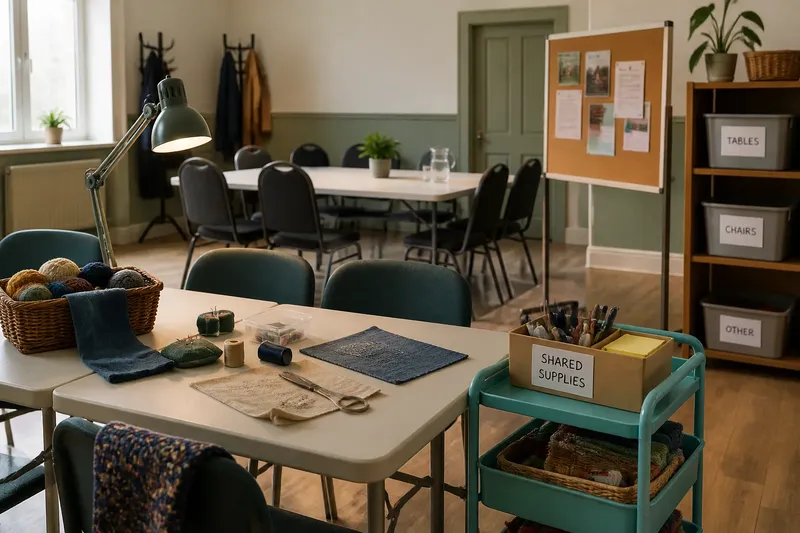
A community hub can begin with one ordinary change: a room used for evening meetings also makes space for a mending circle or a quiet drop-in. Turning a meeting room into a community hub is less about buying new furniture than about helping different groups use and care for the same space.
If you help manage a room that sits empty between bookings, start by noticing its limits, asking local groups what they need, and trying reversible changes. The goal is not to make one room perfect for every activity. It is to make the room easier to share without losing its welcoming feel.
What can the room already support?
Visit at different times of day and notice how people enter, where they leave coats, whether the light works for reading, and whether there is a quieter corner. An empty room can seem flexible until chairs, bags, and conversation fill it.
Sketch a simple plan on paper. Mark doors, windows, radiators, storage, and fixed furniture. Note which areas can be rearranged and which should remain clear. This need not be a technical floor plan; it is a shared reference for discussing possible uses.
Pay attention to the room’s everyday signals. A locked cupboard, a table covered with old notices, or a stack of chairs no one knows how to move can make the space feel reserved for insiders. A clearly marked shelf for shared materials and a place for coats make ordinary use more straightforward.
Who could use the room between meetings?
Ask current visitors what would be useful, and talk with groups that do not yet book the space. Keep the questions concrete: What activity would you bring? What would it need? What might make the room difficult to use? A parent group, repair circle, or neighborhood association may each identify different needs.
Say a neighborhood room is used only for committee meetings, and a local mending group wants a place to work. The coordinator asks what the group needs for tables, lighting, supplies, and cleanup, then schedules a trial session with the existing folding tables and a labeled basket for shared tools. During the session, the group notes whether the tables provide enough work space, the lighting is comfortable, supplies are easy to find, and the room can be reset without difficulty. If the existing setup works, the coordinator can keep it for future bookings; if it does not, the group can identify a specific change, such as moving a lamp or adding a storage label, before arranging another session.
Not every activity belongs in the same room. A lively children’s activity may clash with a quiet advice session, while wet materials may require a surface the room does not have. Discussing such limits early helps groups adapt their plans without making the decision feel like a judgment about who is asking.
How can the layout be easier to change?
Favor changes that are simple to reverse. Lightweight folding tables, stackable chairs, a rolling cart, and a freestanding noticeboard can support different arrangements without turning the room into a storage area. Keep the path from the entrance to seating open, and do not put supplies where they block a doorway or hide signs.
Choose a basic layout for common uses instead of settling on one permanent arrangement. Chairs can face one another for a discussion; tables can form small islands for hands-on work. Leave room for people to move between seats and reach the door comfortably. A sketch by the storage area can show where furniture belongs after use.
Make shared items easy to identify. A basket with pens, sticky notes, and blank paper can support many sessions. Label where things go, not just what they are. If a group brings specialist materials, agree on where they may be kept and who will take them home or return them to storage.
What agreements help groups share the room?
Write down how groups reserve the room, who opens and closes it, what happens when a booking changes, and how users should leave the space. A short note near the entrance can prevent repeated explanations and help new groups follow the same routine.
- Booking: Check how groups request a time and how they confirm availability. If the process is clear, use it consistently; if it is not, name a contact who can clarify requests.
- Furniture: Check that the usual places for tables and chairs are shown and that fixed items are identified. If the layout is clear, follow it; if not, add a simple sketch beside the storage area.
- Shared supplies: Check which materials groups may use and where personal items belong. If the distinction is clear, leave supplies in their labeled places; if not, label shared and personal storage separately.
- Reset: Check whether the room’s expected end-of-session condition is stated. If it is, use the listed tasks; if not, write down visible actions such as clearing surfaces and returning furniture.
- Access: Check who handles entry, accessibility requests, and room problems. If a contact is named, direct questions there; if not, assign a contact before the next booking.
- Conflicts: Check how overlapping needs or unsuitable activities will be discussed. If a process exists, use it; if not, agree on a contact and a way to discuss alternatives with the groups involved.
Keep agreements proportionate. A small reading group may need only a booking process and reset routine; a craft session may need clearer arrangements for supplies and cleanup. If the room’s permitted use depends on its lease, insurance, equipment instructions, or local rules, check those requirements before approving an activity.
Which questions help you choose the next change?
How can you tell whether a community hub is flexible enough?
Notice whether people can arrange seats without blocking access, find shared supplies, and leave the room ready for another group. If the same obstacle keeps recurring, address that specific problem before adding furniture.
What helps a new group feel welcome in a shared room?
Clear signs, visible booking information, and storage that is not controlled by one long-standing group help newcomers understand how the room works. A named contact gives them somewhere to direct practical questions.
Should every activity use the same community room?
No. Some activities need different equipment, quieter surroundings, or more storage than the room can offer. A useful hub can connect groups with suitable nearby spaces rather than trying to host every activity in one room.
How can groups leave the room ready for others?
Make resetting part of the booking agreement, with a short list of visible tasks and a known place for furniture and supplies. If a group cannot complete the routine because of its activity, agree on another arrangement before the session.
How can the room stay distinctive as it changes?
A community hub need not erase the character of the groups that use it. Leave space for a rotating display of local work, a noticeboard for current activities, or a shelf for materials with a shared purpose. Make clear which displays are temporary and who can update them, so one group’s presence does not quietly become permanent control.
After the room hosts different activities, ask what felt easy, what created extra work, and whether people could find what they needed without relying on one particular person. Use the answers to make one modest adjustment at a time: a clearer label, a better storage spot, or a more useful booking note.
Turning a meeting room into a community hub does not mean keeping it busy every day. It means making its arrangements responsive to local groups and understandable to the next person through the door. Before each new booking, check that the entrance route is clear, shared materials have a known place, and the reset instructions are easy to find.